(EN)
(EN)
 (ES)
(ES)
 (IT)
(IT)

Canceled for Believing: Woke Culture and the Price of Being Catholic Today
The Clash Between the Catholic Faith and Woke Culture: An Urgent Reality
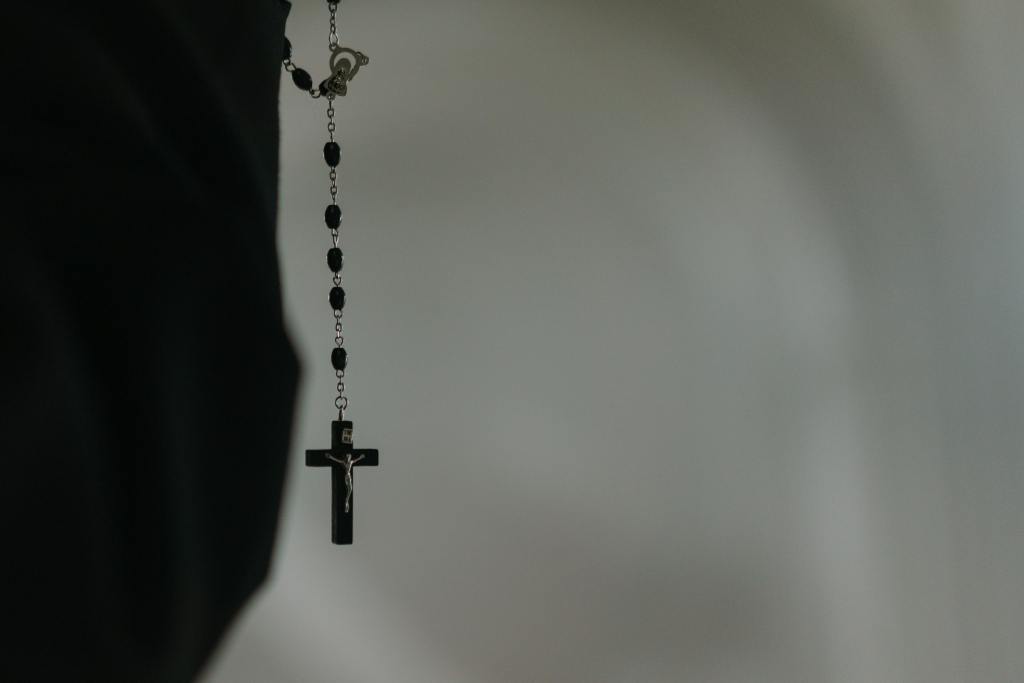

In recent decades, Western society has experienced dramatic cultural changes, marked by the emergence of what has been termed “woke culture.” This phenomenon, born in social and academic circles, promotes a vision of social justice based on political correctness, identity, and the denunciation of structural inequalities. However, this culture has generated a strong clash with traditional beliefs and, in particular, with the Catholic faith. Many believers today face a reality in which “being Catholic” can carry the risk of being marginalized, erased, or labeled as intolerant.
What is woke culture, and why does it clash with Catholicism?
Woke culture, a word that means “awake” or “conscious,” emerged as a movement seeking to raise awareness about social injustice, racial discrimination, gender discrimination, and human rights. At its core, it aims to be a call for empathy and social transformation.
However, at its most radical, woke culture tends to impose an ideological vision and reject anything that doesn’t align with its tenets. These include issues such as sexual identity, the role of the family, religious freedom, and objective morality, points that frequently conflict with Catholic teachings.
The Church, faithful to its mission, maintains a clear position on issues such as the dignity of the person, the value of marriage between a man and a woman, respect for life from conception to natural death, and freedom of conscience. These teachings are not subordinated to cultural trends or social pressures, which often places Catholics in a difficult position in environments dominated by woke culture.
The “price” of being Catholic today: cancellation and marginalization
Being Catholic in certain contemporary contexts can mean facing social “cancellation.” This term, popularized on social media, describes the exclusion or boycott of people who express ideas contrary to the mainstream.
The “price” of this loyalty includes:
-
Public stigmatization: Catholics are sometimes portrayed as backward, intolerant, or enemies of social progress.
-
Professional exclusion: In the workplace, expressing faith-based beliefs can lead to conflict, limit opportunities, or lead to unfair dismissal.
-
Censorship on social media and in the media: Self-censorship and direct censorship affect the ability to freely defend one’s faith.
-
Pressure to renounce beliefs: One is required to adapt one’s discourse and practice to the dominant ideology, under threat of social reprisals.
However, it is important to emphasize that this situation is not new in the history of the Church. Since its beginning, Christians have experienced persecution and exclusion for maintaining their faith.
Catholic Responses to Woke Culture: Dialogue and Firmness
In this context, the Catholic Church invites us to live with courage and charity. Some key points for facing the challenge of woke culture are:
-
Solid formation in the faith: Deep understanding of the Church’s teachings and rationales in order to give authentic and well-founded witness.
-
Respectful dialogue: Seeking out encounters with those who think differently, maintaining respect and openness to dialogue without compromising the truth.
-
Consistent Witness: Living the faith consistently, showing Christian love and mercy, even in the face of adversity.
-
Defense of religious freedom: Promote and demand respect for freedom of conscience and expression, which are essential for plural coexistence.
-
Use of reliable Catholic media: Strengthen communication through Catholic platforms and websites that provide truthful and in-depth information.
Christian hope as a transformative force
Although woke culture represents a significant cultural challenge, the Catholic faith has a transformative power that transcends trends and social pressures. The teachings of the Gospel invite us to live the truth with humility and love, without fear of opposition.
Saint John Paul II recalled that the truth is always liberating and that “freedom consists in doing good” (cf. Evangelium Vitae, 1995). This freedom is what Christians are called to defend and live, even if it means being “cancelled” by a society that doesn’t understand the depth of their commitment.
Woke culture, with its legitimate aspirations and also its excesses, presents a complex scenario today for Catholics who wish to live their faith authentically. Being Catholic in times of cancellation requires courage, formation, and charity, as well as a renewed commitment to truth and freedom.
Far from discouraging, this reality can be an opportunity to reaffirm Christian identity and to bear witness to a message of hope, which is not extinguished by difficulties, but rather strengthened by them.

Patricia Jiménez Ramírez
Soy una mujer comprometida con mi familia, con una sólida experiencia empresarial y una profunda dedicación al hogar. Durante años trabajé en diversos entornos empresariales, liderando equipos y gestionando proyectos de impacto. Sin embargo, en los últimos años he tomado la decisión de centrarme en mi hogar y dedicar más tiempo a mi marido e hijos, quienes son mi mayor prioridad. Mi experiencia en el ámbito empresarial me ha brindado valiosas habilidades en gestión del tiempo, organización, liderazgo y resolución de problemas, que ahora aplico en mi vida familiar para fomentar un ambiente armonioso y saludable para todos
Related