 (EN)
(EN)
 (ES)
(ES)
 (IT)
(IT)

Leo XIV: An Undeserved Gift for Latin America and the World
As the first month of Leo XIV's pontificate approaches, Exaudi speaks with Rodrigo Guerra, secretary of the Pontifical Commission for Latin America (CAL), until recently presided over by Cardinal Robert Prevost. How is the new pontificate shaping up? What kind of understanding does Pope Leo have of the Latin American Church and region? How is the new Pontiff perceived by Latin American bishops?
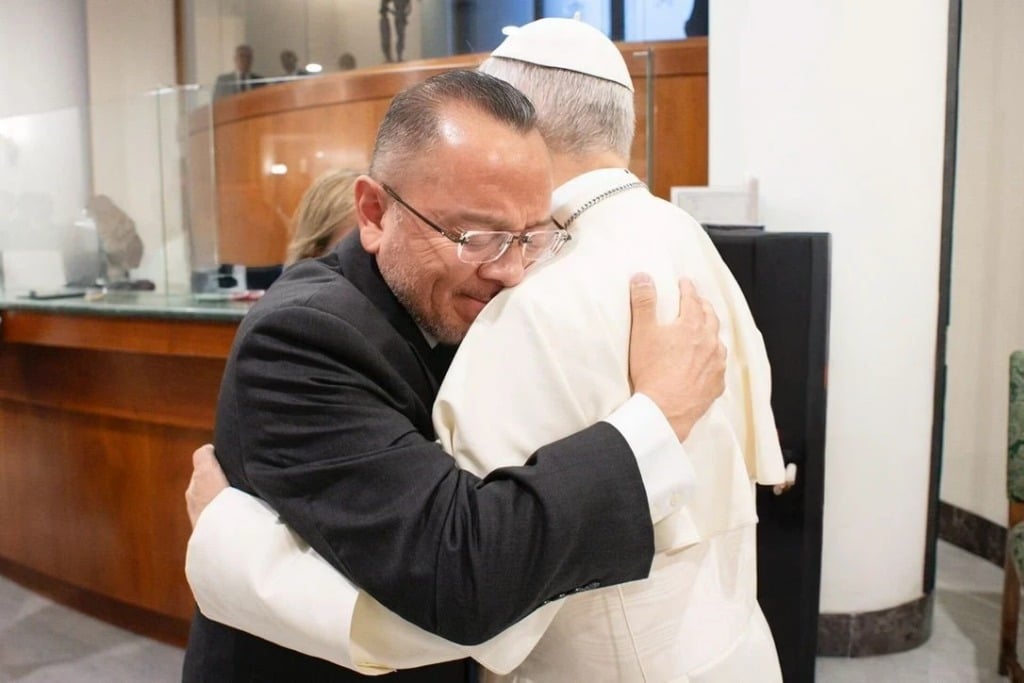

Exaudi: When and how did you meet Cardinal Robert Prevost? What were your first impressions?
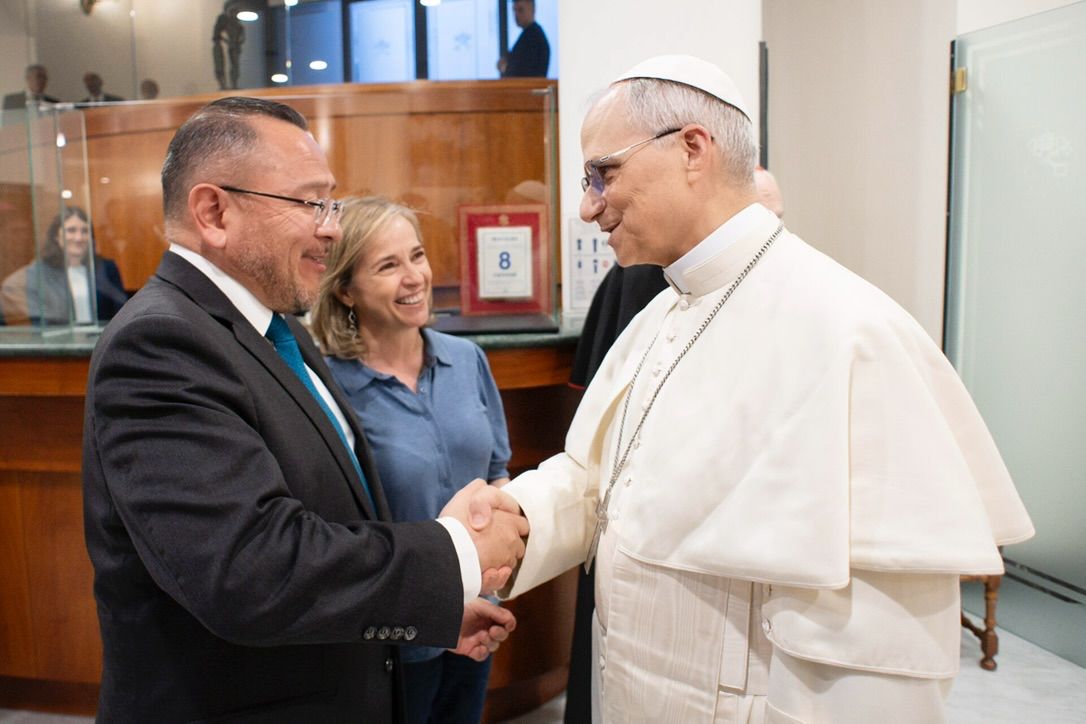
RG: At the end of January 2023, Pope Francis accepted the resignation of Cardinal Marc Ouellet as Prefect of the Dicastery for Bishops and as President of the Pontifical Commission for Latin America. To our surprise, the bishop appointed to replace him turned out to be the Bishop of Chiclayo, Msgr. Robert Francis Prevost Martínez. Through my previous collaboration with CELAM, I knew a wide variety of bishops; however, I had no news of Msgr. Prevost. As soon as he assumed office, we began working closely. We frequently met in his office or at the CAL to discuss all kinds of issues related to the Church in Latin America. Perhaps what struck me most at the beginning was his enormous inner and outer peace. I dare say he has a unique personality that calms even the most tense.
Exaudi: What was your impression on election day? Did you expect to hear your name called?
RG: I secretly thought that Cardinal Prevost could be a magnificent Pope. However, with a worldly perspective, I also told myself that the “candidates” most frequently mentioned in the media would surely overwhelm the election process, and that only in the event of a long conclave would names like Robert Prevost’s emerge as a force. Thank God, I was completely wrong, like so many other professional or amateur Vaticanists who appeared in those days.
When the balcony opened and the name of Robert Francis Prevost was pronounced, I felt an indescribable emotion. Suddenly, my head was filled with the certainty that God had taken pity on our Church and had intervened in an extraordinary way. After the Pope’s greeting in the Square, my wife and I headed to Casa Santa Marta. We entered with Bishop Ilson Montanari, secretary of the Dicastery for Bishops. After a short while waiting in the hall of the Casa, a small side door opened, and there was my boss, now dressed in white. I don’t think I’ll ever forget that moment. I just thought: this is an event of Grace. It is an undeserved irruption of the Mystery into the life of the world. We congratulated him and hugged him. He gave us his blessing.
Exaudi: What kind of training does Cardinal Prevost have? How would you define his theological and pastoral profile?
RG: We live in an era that seeks to simplify things through various “labels.” These “labels” are used to qualify or disqualify profiles, groups, or movements. However, reality is often more complex than these simplifications. Pope Leo XIV received his initial theological training in 1978 at the Catholic Theological Union in Chicago. This institute had been established ten years earlier, combining three schools of theology and seeking to embrace the teachings of the Second Vatican Council. He then studied for a licentiate and doctorate in canon law at the Angelicum in Rome, completing his studies in 1987. The Angelicum is a university that provides a solid Thomistic formation to all its students. However, perhaps the most decisive and relevant aspect for understanding the “profile” of our new Pope is his belonging to the Augustinian family and his missionary vocation, which led him to work in Peru for forty years.
Saint Augustine is the saint of the primacy of grace and of his critique of Pelagian moralism. Augustine is the man who understood that the human heart experiences the tension of dwelling in two cities: that of God and that of man. If we are faithful to God, we can be citizens of the world without idolatry. If we are faithful to the world, we will end up confusing the defense of truth with violence and the destruction of people, as happened so often in ancient times.
Likewise, Bishop Prevost lived his charism by evangelizing a marvelous land like Peru. There he encountered the indigenous and mestizo world, the diverse Latin American baroque culture, our cherished popular religiosity, and our hopeful faith. There he discovered pastoral sensibilities of all kinds. But more importantly, in those lands he found the great opportunity to renew communion as a method: “In Illo uno, unum,” in which He is One, we are one. In other words: if we follow Jesus, we must learn to risk our lives for reunion, for communion, for reconciled unity.
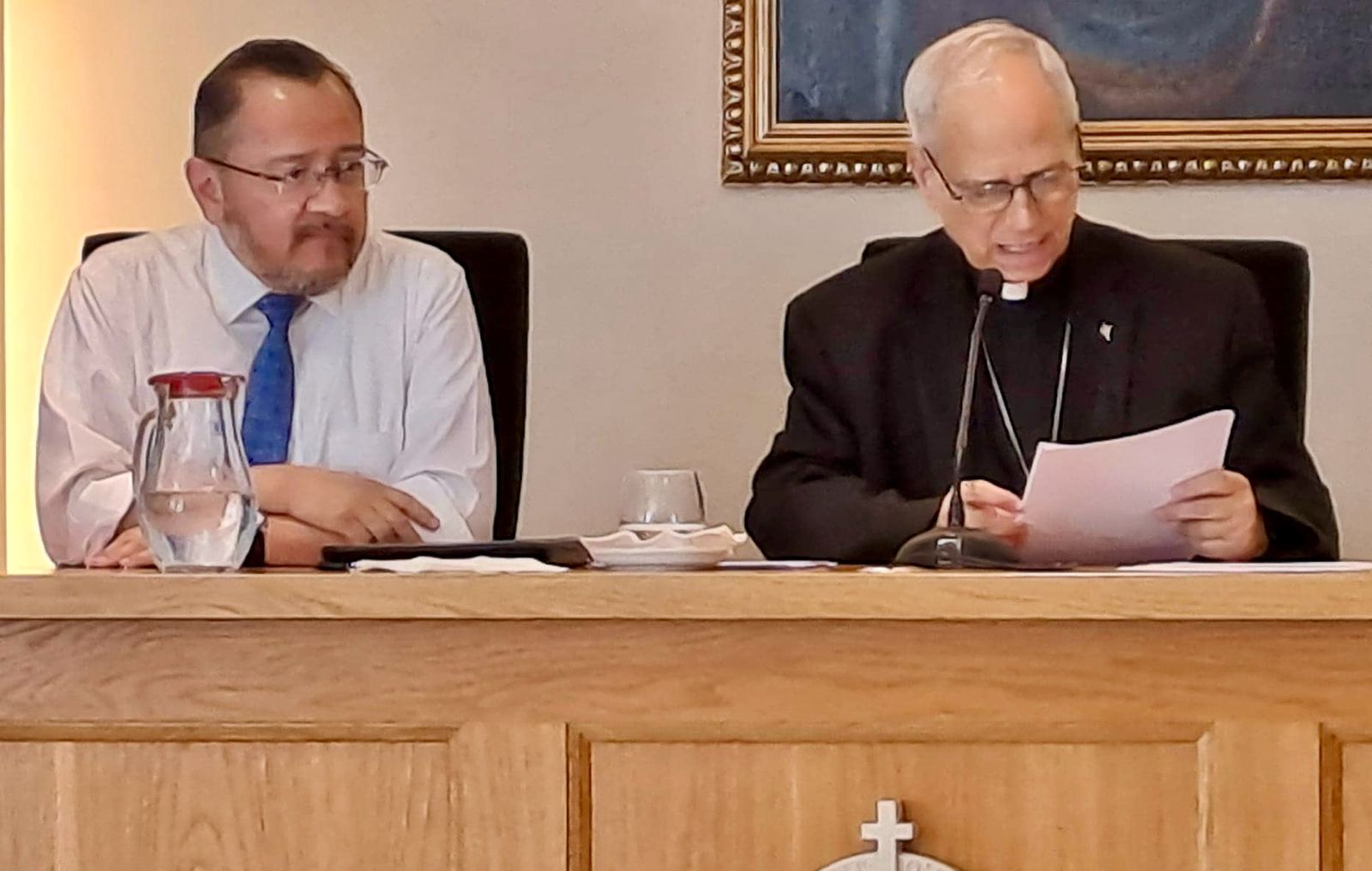
Exaudi: Given your training in the Angelicum, you might appear to be a conservative bishop. Is that correct?
RG: I have the impression that Pope Leo XIV discovered long ago that Catholic conservatism and liberalism are ideologies, that is, factional reductions of the truth. He has experienced firsthand the harsh criticism of fundamentalist atmospheres. A lying and merciless criticism of those who don’t know how to live in communion. He has also seen the intolerable dissatisfaction of those who consider themselves more creative and advanced than the Holy Spirit, and who also end up eroding the unity of the Church. Does this mean that Robert Prevost is sailing in a sea of lukewarmness? I sincerely believe not. He has known how to govern with pastoral affection and sincere dedication a diocese that had traditionally been animated by Opus Dei. At the same time, he has not hesitated to show appreciation for the beloved Gustavo Gutiérrez.
Let me put it another way: Cardinal Prevost did not suffer the teachings of Pope Francis; he appreciated them and learned everything he could from them. This was possible because he knew how to position himself as a disciple before the gift that God bestows in the person of the Successor of Peter. He is a man who values authority as service and obedience as availability to the event of the Kingdom. In a certain sense, through these attitudes, he has lived within the best and most providential school for being Pope.
Exaudi: In your opinion, how has Pope Leo XIV been received in the Curia, in Rome, in the Church?
RG: It’s still too early to assess how the new Pope is being received. I believe the People of God, both in Rome and almost everywhere in the world, are joyfully discovering that God has not abandoned His Church. And that the enormous void left for many of us by the death of Pope Francis is being filled in an extraordinary way through the person of Leo XIV. Suddenly, looking at some comments in the press, I get the impression that in some quarters there is a desire to “pull water on their own water.” Some sectors unilaterally emphasize certain red vestments, prayer in Latin, or the mention of heterosexual marriage open to life, in an attempt to affirm that in some way we are returning to a certain “order” and “tradition.” Others emphasize how many times he has mentioned the word “synodality” or issues associated with “social doctrine” to indicate that he is a “progressive” Pope. The truth is that Pope Leo XIV is not John Paul III or Francis II. Much less is he Benedict XVII. I believe he has learned unashamedly from the popes of the past, but we have to let him be himself. And that will be part of the openness God expects of us for the maturation of the Church in this new stage of history.
Exaudi: What themes do you think Leo XIV will take up from Leo XIII in the new context of our time?
RG: Pope Leo XIV sought to explain the choice of his name, and he immediately spoke of “Rerum novarum” and how Pope Pecci faced the challenge of the Industrial Revolution in the 19th century. Undoubtedly, Pope Leo XIV would do the same in the context of the so-called “fourth industrial revolution.” However, Leo XIII was also the Pope who lived through the challenge of “Americanism.” In other words, since the 19th century, segments of the Catholic Church in the United States had subordinated the faith to “liberal American culture,” as if a certain way of being “American” were the hermeneutical criterion for defining what it means to be a Christian.
I believe that, mutatis mutandis, Pope Leo XIV, who is particularly familiar with the current ethos of the Church in the United States, will have to address the distortion that comes with believing there is only one way to live and celebrate the faith. A regrettable example of how faith is sometimes subordinated and manipulated from a biased nationalist perspective is the lack of critical distance some Catholics in the United States exhibit from their partisan views. The phenomenon of “MAGA Catholics” and similar groups deserves to be understood and addressed with charity and crystal clarity. This mentality leads to absurdities such as affirming the right to life from conception and failing to respect the fundamental rights of undocumented migrants, or ardently fighting for heterosexual marriage while simultaneously favoring the “death penalty,” contradicting not only the Catechism of the Catholic Church but also the most basic understanding of the equal dignity of every human being.
It’s worth remembering that Leo XIII was also the Pope who, at the time when ultraconservative sectors in France were seeking some kind of return to the “ancien régime,” courageously supported the “Third Republic” and democracy. In other words, since the time of Leo XIII, the “conservatives” were already revealing their essence. What is crucial for a Catholic is to remain in dynamic communion, in synodality, that is, to bear creative witness to unity in the Church, thus promoting reconciliation and fraternity in a divided and wounded world.
Furthermore, Leo XIII was the Pope of “Aeterni Patris,” that is, of the Encyclical that revived the study of Saint Thomas Aquinas in the formation of the Catholic clergy, and which later bore important fruit in countless lay circles. I don’t think Pope Leo XIV will invite us to a melancholic return to Saint Thomas, but it is possible that he will strengthen the intellectual formation of Catholics with new resources. For those of us who consider modernity to be a form of Augustinianism whose anti-Pelagian controversy has been erased, nothing would excite us more than an invitation to delve deeper into the thought of the saint of Hippo, in an updated way.
Finally, Leo XIII wrote nine encyclicals on the Virgin Mary. At a time when there are abundant Marian experiences that are out of step, whether due to their Gnostic character, their purely sentimental nature, or their lack of ecclesial integration, authentic love for Mary cannot lead us in any other direction than that marked by Chapter VIII of the Constitution “Lumen Gentium.” Mary is the “typo,” the model, of the Church. She is not a mere message for private devotion but the existential fulfillment of the Church, as she should be. In my opinion, the Mariological deficit in some contemporary ecclesiologies deserves to be corrected by following the lead of the Second Vatican Council and the theologians who value popular spirituality. In Latin America, this is very clear: the popular experience of faith is not mere folklore. It is, as Francis said, a mysterious but real theological action that transforms hearts and evangelizes. This celebration of faith, moreover, is constitutively Marian. The poorest may not express it with the grand categories of European theologians, but they live it within as a profound and decisive experience. Appreciating these things, which compel us to place our hearts in the hearts of the people, synodality could find its “natural” and “conciliar” pneumatological and Mariological framework.

Exaudi Staff
What is Exaudi News? Exaudi News is an international Catholic media outlet that informs, shapes, and transforms daily in Spanish, English, and Italian. Through news, analytical articles, and live broadcasts of the Pope's events, Exaudi seeks to strengthen Christian unity and contribute to the evangelization of the world, always guided by the Church's social doctrine. We work to bring Christian truth and values to every corner of the planet. Help us transform the world with Exaudi! At Exaudi, we believe that evangelization and quality information can change lives. To continue our mission and expand our reach, we need your help. In addition, we are looking for committed people to join our team. With your support, we will reach more people, spread the message of Christ, and strengthen Christian unity. Will you join our mission? For more information on how to collaborate, visit Exaudi.org or contact us directly: [email protected] Exaudi: Informs, educates, and transforms.
Related
The Shroud disturbs those who do not want to encounter Christ in their lives
Wlodzimierz Redzioch
03 April, 2026
4 min
Marta Velarde: “Spain trivializes abortion and is one of the countries with the highest abortion rates”
Exaudi Staff
02 April, 2026
5 min
The best vocations are at this table
Se Buscan Rebeldes
31 March, 2026
6 min
A Rebel with a Cane: The Cross That Became a Miracle
Se Buscan Rebeldes
24 March, 2026
3 min